











 Dog
Dog
 Cat
Cat

 Sign In
 Create Account


When we think about our dogs’ health, digestion is often the first thing that comes to mind. But the gut does far more than simply break down food. In fact, your dog’s gut is a central control system that influences immunity, nutrient absorption, skin and coat health, and even cognitive function.
As a board-certified veterinary nutritionist, I often tell pet parents that when the gut is healthy, everything else has a better chance of thriving.
What Is Gut Health In Dogs—and Why Does It Matter?
Your dog’s gut is home to a complex community of microorganisms known as the gut microbiome. This ecosystem of beneficial bacteria plays a critical role in maintaining overall health.
A healthy gut supports:
- Healthy digestion in dogs
- Improved nutrient absorption in dogs, including vitamins, minerals, and fatty acids
- Strong immune system in dogs as nearly 70% of immune cells reside in the gut
- Healthy dog stool quality and regular& bowel movements
When this system is balanced, we see a thriving gut which can mean more stable digestion, better energy levels, and even improvements in areas like skin and coat.
What Are Signs of Poor Gut Health in Dogs?
Gut health imbalances can show up in subtle, and not-so-subtle, ways. Common signs that your dog’s gut health may need support include:
- Inconsistent dog stool
- Digestive issues in dogs
- Dog skin and coat problems
-
Changes in dog appetite or energy
While these symptoms can have multiple causes, they often point back to a dog’s gut microbiome and how well it’s functioning.
What Supports a Healthy Gut in Dogs?
Supporting gut health isn’t about a single ingredient, it’s about a system. In veterinary nutrition, we look at three key components:
- Prebiotics For Dogs: These are specialized fibers (like those from dried chicory root) that feed beneficial bacteria already living in the gut.
- Probiotics For Dogs: Live, beneficial microorganisms that help maintain a balanced microbiome. Their effectiveness is often measured in CFUs. CFUs in probiotics means colony-forming units, which is a marker of how many viable microbes are present.
- Postbiotics For Dogs: Bioactive compounds produced by beneficial bacteria that help support the gut environment and immune function.
Together, these components work synergistically to support dog gut health and maintain balance.
How Does Dog Gut Health Affect the Whole Body?
The gut is often referred to as a “control center” because of how broadly it impacts health. A well-supported gut can contribute to different functions, such as:
- Immune health in dogs
- Dog skin and coat health
- Joint health for dogs
- Cognitive function in dogs
This is because the gut influences inflammation, nutrient availability, and immune signaling throughout the body.
A Gut Health Dog Food Approach
Traditionally, gut health support has come in the form of supplements added on top of a dog’s regular diet. But increasingly, we’re seeing the benefits of integrating this support directly into complete and balanced nutrition.
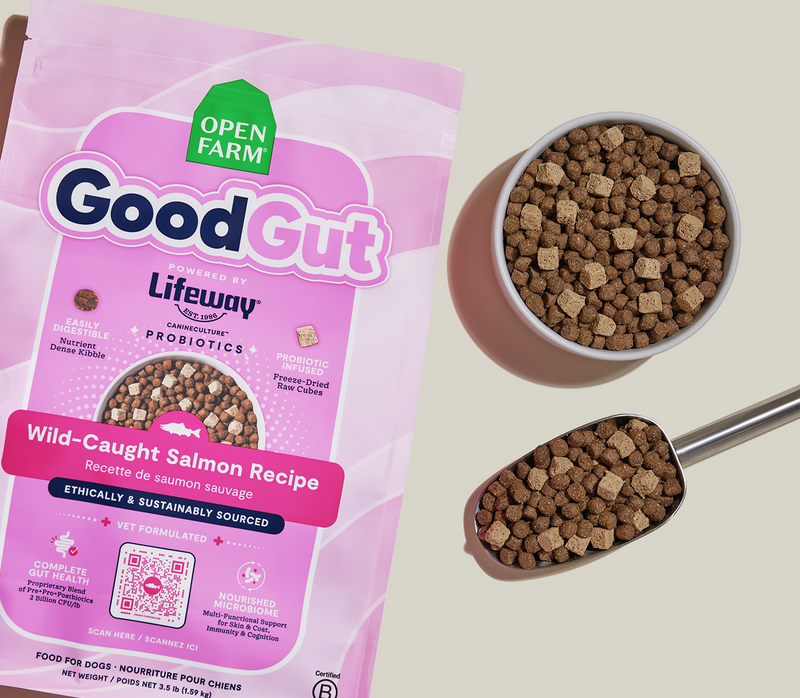
That’s the thinking behind newer gut health dog food approaches, where digestive health is built into every meal. An example of this is GoodGut, a vet-formulated, gut-focused dog food I designed to provide multifunctional health benefits as part of a complete and balanced diet.
GoodGut provides multifunctional gut health benefits through:
- Nutrient-dense kibble with prebiotics and postbiotics
- Freeze-dried raw components that deliver live probiotics
- A multi-strain probiotic system for dogs
By combining high-quality functional ingredients with targeted nutritional science, GoodGut provides daily, whole-body support without the need for additional gut health supplements.
What Makes a Healthy Dog Gut…Healthy?
When I evaluate a dog’s gut health, I look for:
- A balanced dog microbiome rich in beneficial bacteria
- Efficient digestion in dogs
- Optimal nutrient absorption in dogs
- Regular, healthy dog stool
- These are the visible indicators that the internal dog gut system is functioning as it should.
Supporting Your Dog’s Gut, Every Day
Gut health isn’t something we address once, it’s something we support daily through nutrition.
If you’re looking to improve your dog’s gut health, consider:
- Choosing a complete and balanced diet with functional ingredients
- Looking for dog food with pre-, pro-, and postbiotics
- Prioritizing high-quality, digestible dog food with the right level of functional fiber
- Maintaining consistent feeding routines
Dr. Moran’s Takeaway
Your dog’s gut does much more than digest food, it’s a foundation for lifelong health. By supporting the microbiome through multifunctional science-backed dog nutrition, we can help dogs feel better day-to-day and build lifelong resilience. Because when the gut thrives, everything else follows.
Follow along for more monthly insights from Dr. Moran as we break down the science behind better nutrition.
This article is meant only as an example of what might work well for your pet, please reach out to our Pet Parent Experience Team if you have any questions about your pet’s own unique circumstances! To ensure these products are a good fit for your furry friend, we also recommend consulting your vet about any new diet, or environment changes, especially if there is a medical concern. They should be able to help as you and your vet know your pet’s medical history best!


